By Norm Witte
For those who follow the CAMS Facebook page, you are probably more aware than you ever wanted to be that I have two, and possibly three, F-105 projects currently underway. I won’t go into the gory details about that except to say that, right now, I am planning on having a pair of 1/48th scale F-105G Wild Weasels eventually completed.
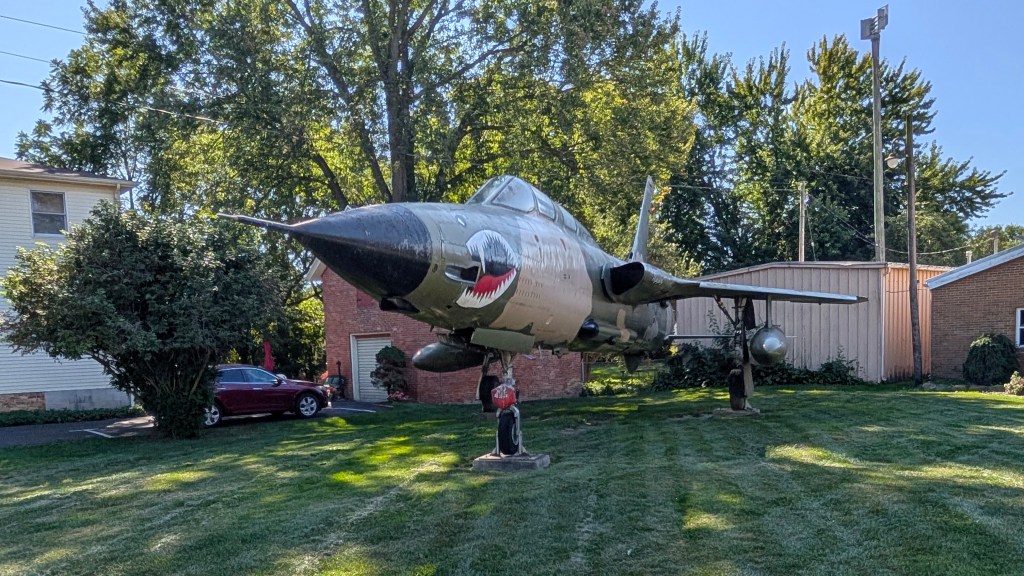
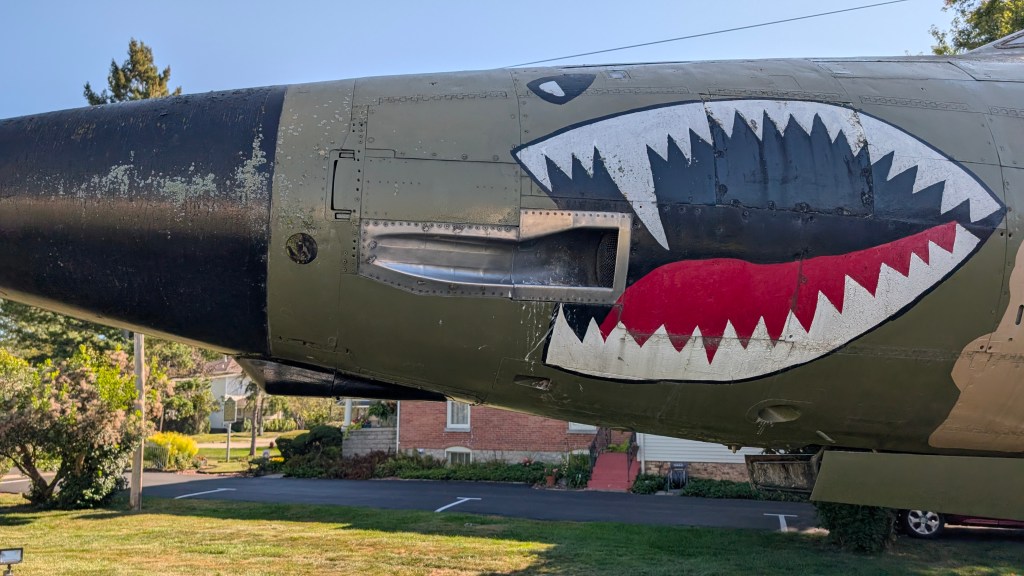
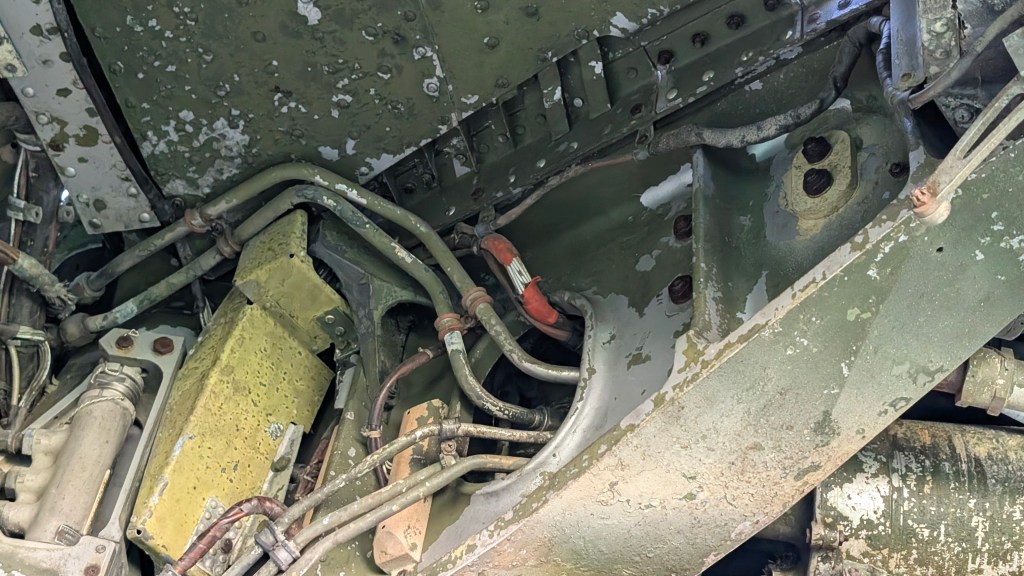
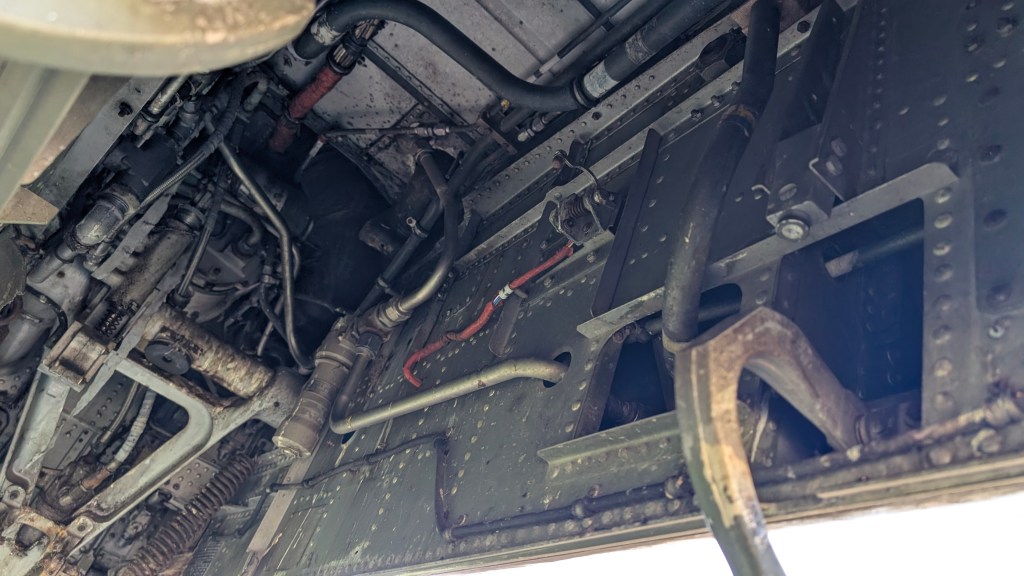
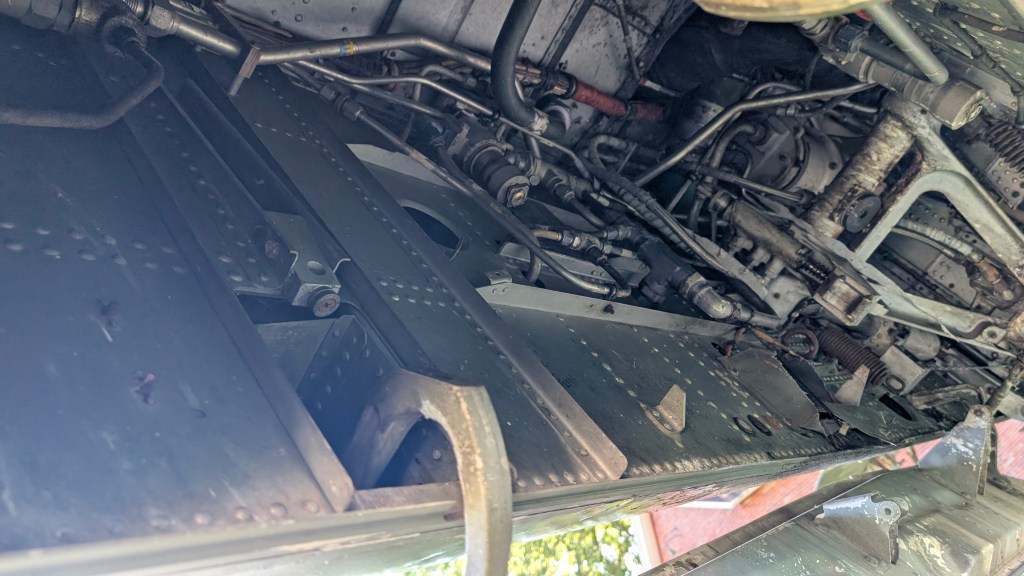
It is always good to have reference photos of a real example of your subject so that you can see just how wildly inaccurate the model you are building is. It just so happens that there is one F-105 in Michigan, and it is sitting outside Sons of the American Legion Post 325 in Blissfield. It also just so happens that it’s an F-105G, which is the version I’m building. It was therefore inevitable that I would make a trip to see this plane and take some pictures.
Choosing to avoid highways in Google Maps, the drive from our home to the plane takes just under two hours, and that is what Joy and I did Labor Day morning. We jumped in the ’68 Imperial and hit the backroads, me enjoying the scenery, Joy enjoying her cross-stitch, meandering through southeast Michigan.
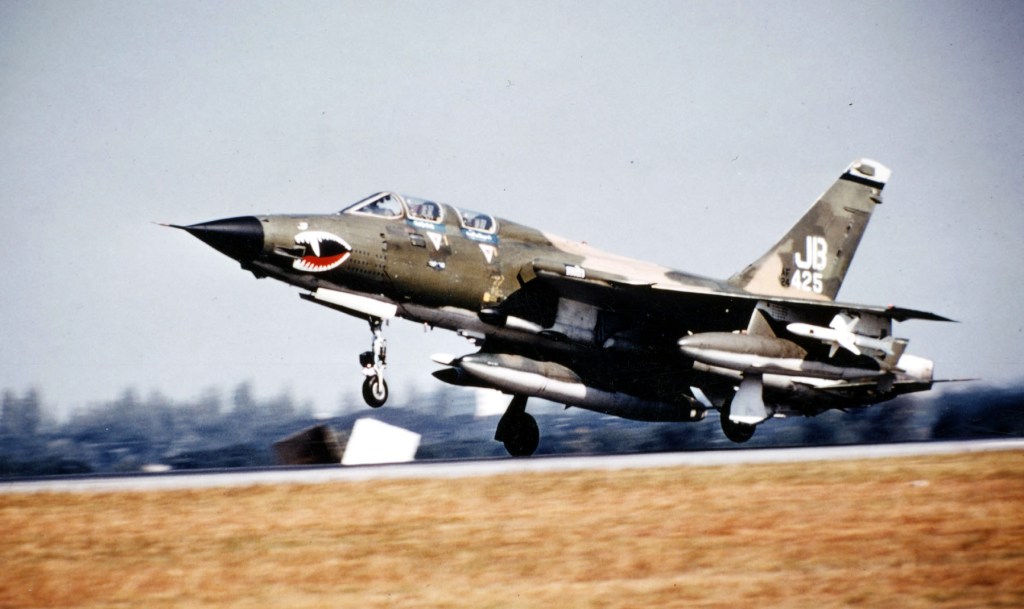
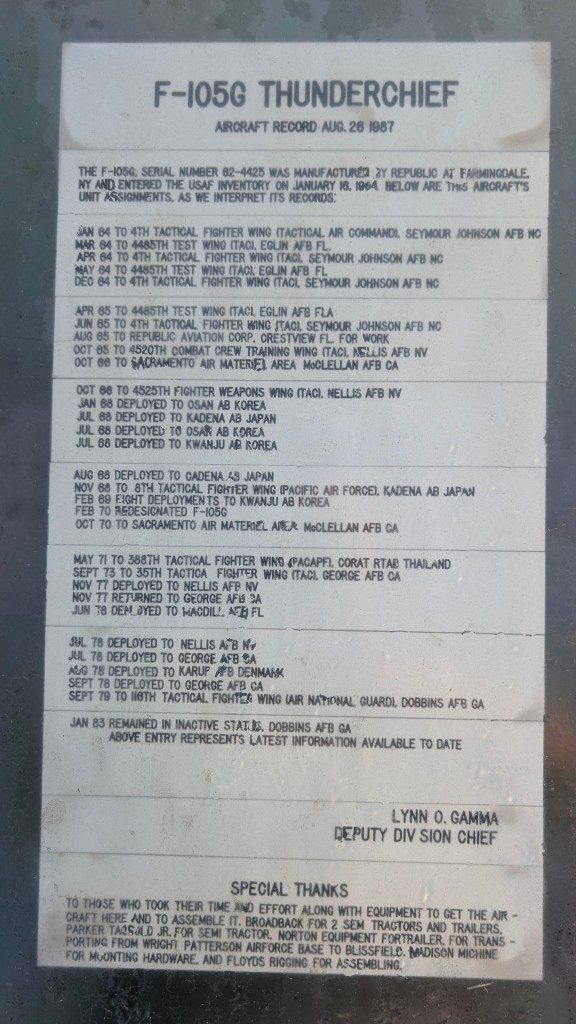
The F-105F 62-4425 was built by Republic Aircraft in Farmingdale, New York, and added to the United States Air Force inventory on January 16, 1964. Around February 9, 1970, it was converted to the F-105G Wild Weasel (SAM suppression) configuration and was eventually assigned to the 17th Wild Weasel Squadron, 388th Tactical Fighter Wing, operating from the Korat Royal Thai Air Base in Thailand, from where it flew missions into Vietnam. This aircraft is sometimes called NAADA, a reference to the name marking on the intakes. The actual lettering is in some language I cannot identify.
By 1981, the plane had been assigned to the Air National Guard in Dobbin, Georgia. One night that year, a landing went wrong and the tail of the aircraft struck the runway. The damage to the aft portion was so severe that the rear section of the plane was swapped with that from 63-8345, another F-105G at Dobbins.
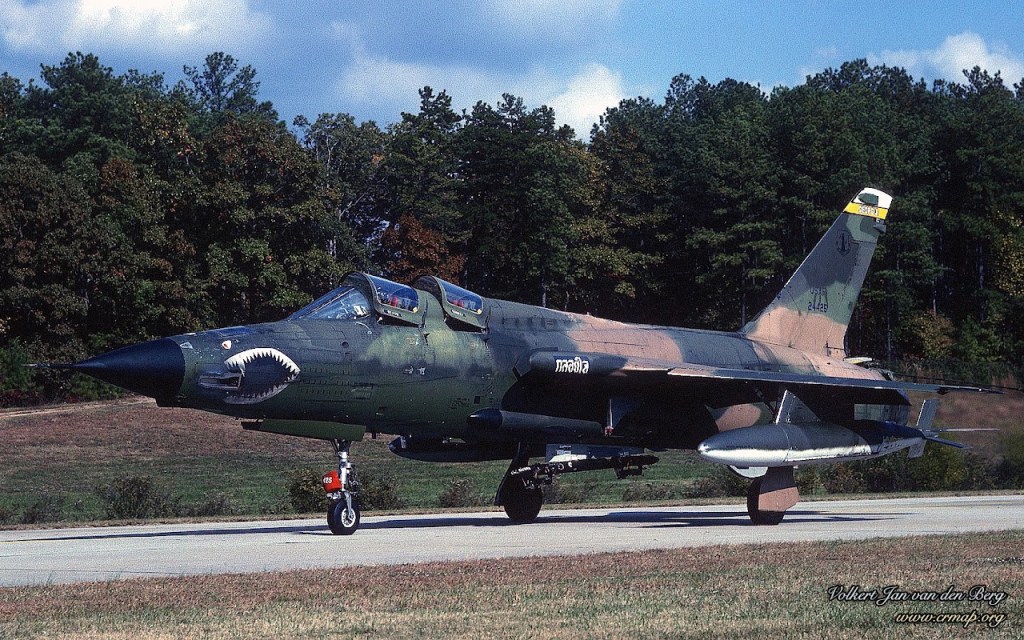
Eventually, the aircraft was transferred to the National Museum of the United States Air Force and subsequently loaned to the American Legion Post in Blissfield.
As part of its demilitarization and transfer, the engine was removed and the aircraft was disassembled for transport. It has been repainted several times and looks about like one would expect for an aircraft displayed outdoors. There are several areas that are badly corroded and the paint scheme on the aircraft does not accurately reflect its operational camouflage. However, it still bears the 62-4425 tail number and the NAADA name. Ironically, the donor plane, 63-8345, is now on a pedestal on display outside of Dobbins Air Force Base painted to look like NAADA.
I took about 180 pictures of the plane, and of course when I got home found that I had missed some shots. The F-105 is tall and I did not have the ability to get high enough to take any pictures of the top of the plane, but I’m happy to share the photos I took with anyone who has an interest. They are in an album on my Facebook page that I have made publicly available. For this article, I’ve included a couple of pictures taken when the plane was operational and some of the more interesting shots that I took of the aircraft as it is today. Uprise Decals’ F-105G Vietnam Set No. 1, which I bought for my model, includes decals to build this particular aircraft among four others, so, needless to say, I now know which decal selection to make.
We had a very pleasant Mexican lunch in Jackson on our way home.
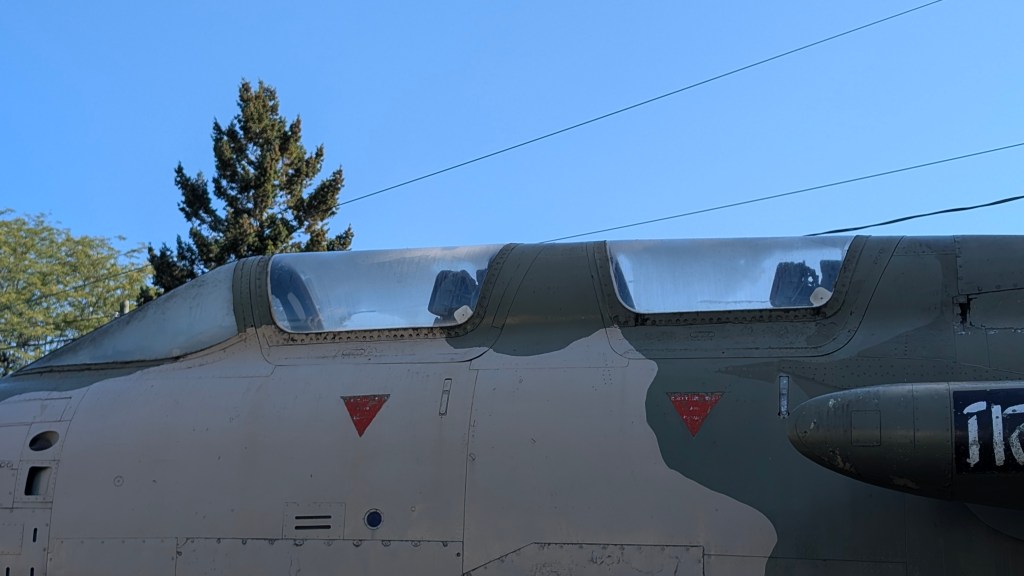
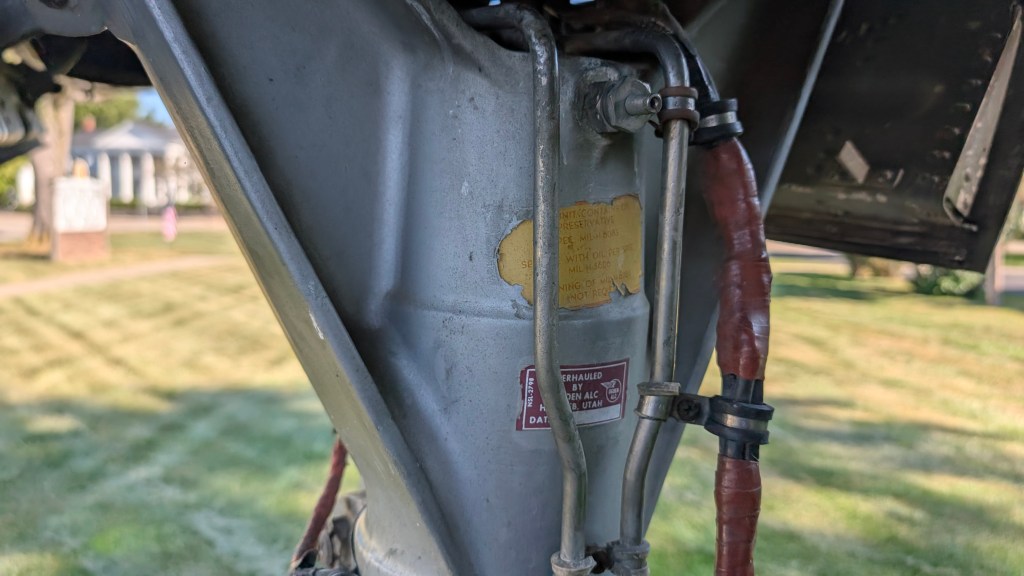

Top left: cockpit from port
Top center: gun port
Top right: main gear bay
Middle left: nose gear bay port
Middle center: nose gear bay starboard
Middle right: nose gear
Left: main gear
Right: history of the plane

 Capital Area Modelers Society
Leave a comment